Chat with us
1

Precision and Protection: Why 3D Modeling is Essential for Technical Bathroom Planning

5 min read
Precision and Protection: Why 3D Modeling is Essential for Technical Bathroom Planning

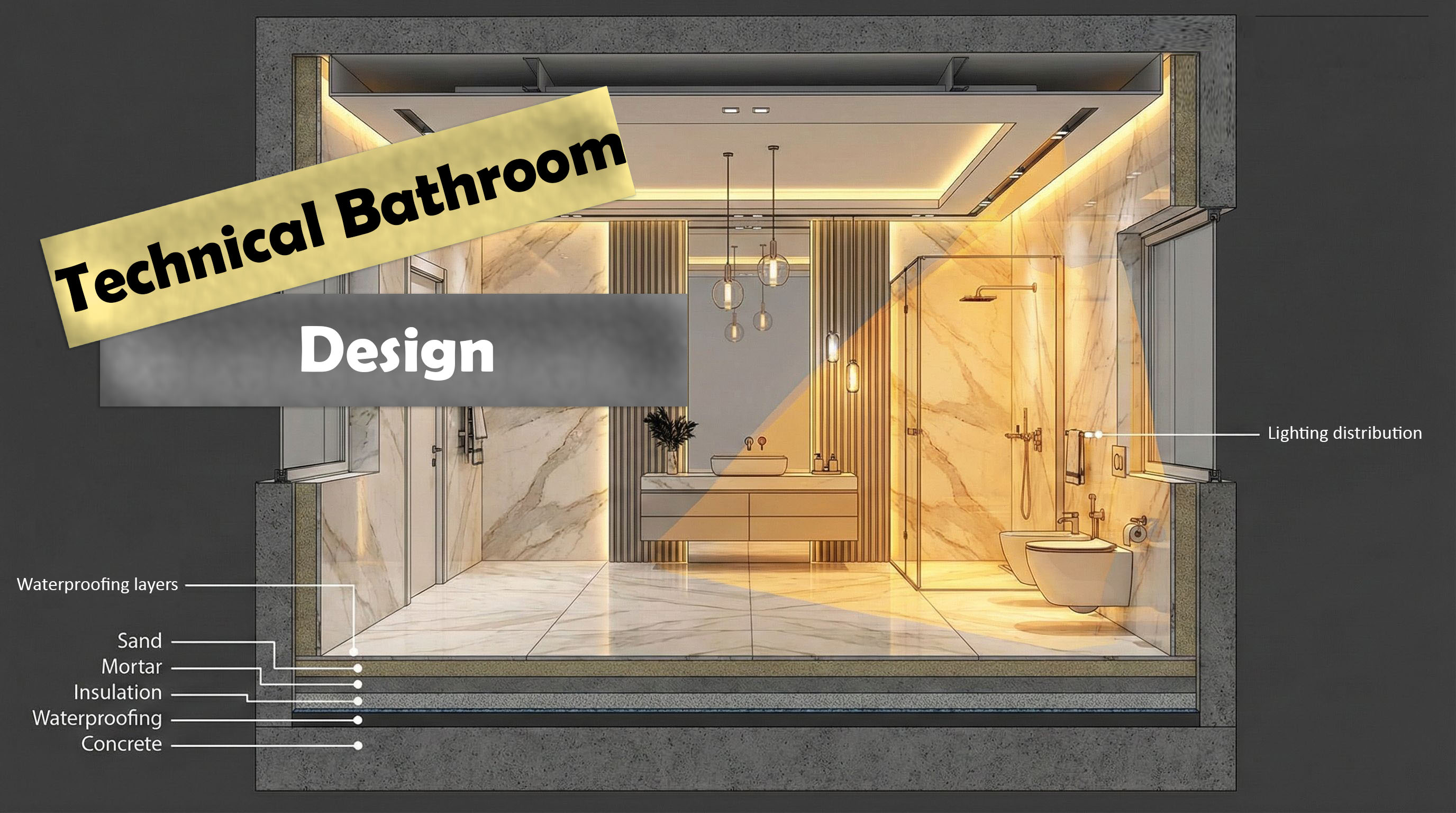
In the world of interior architecture, the bathroom is one of the most technically demanding spaces. It is a high-moisture environment where design must perfectly align with specialized material science. This is why the Plan Salle de Bain (Bathroom Detail Plan) is treated as a separate, critical entity in the DCE (Technical Dossier) phase. At Buildmodeler 3D, we use advanced 3D Modeling to ensure that every bathroom is not only a sanctuary of style but also a masterpiece of technical durability.

Why are Bathrooms Detailed Separately? Bathrooms require a dedicated plan because of the specialized nature of the materials involved. Unlike dry rooms, every surface here must be Hydrofuge (Water-repellent or Moisture-resistant). A dedicated bathroom plan specifies:

1. Hydrofuge Ceilings: Detailed layouts for moisture-resistant gypsum boards or stretch ceilings.
2. Specialized Coatings: Identifying waterproof paints and anti-slip wall coverings.
3. Advanced Tiling (Revetement): Managing the layout of tiles or stone slabs around complex plumbing fixtures and drains.
4. Moisture-Resistant Lighting: Ensuring that the electrical layout respects safety zones (Volumes de sécurité) in wet areas.

The Challenges of Humidity and Space Bathrooms are often the smallest rooms but contain the most technical systems. A mistake in the placement of a shower drain or a poorly planned joint in the tiling can lead to water infiltration, mold, and costly structural damage. Without a detailed 3D preview, it is difficult to judge if the chosen materials will withstand the constant exposure to steam and water splashes.

Why 3D Modeling is Essential for Bathroom Design Integrating 3D Modeling into the bathroom planning phase is the ultimate insurance policy for your project:

5. Visualizing Material Interaction: In 3D, we don't just show you a tile; we show you how it looks when wet or under specific bathroom lighting. You can verify if the texture of the marble and the color of the hydrofuge paint work together before any material is purchased.
6. Perfect Drainage and Slope Coordination: One of the biggest benefits of 3D is the ability to model the floor slopes (pentage) for walk-in showers. We ensure the Calepinage (tiling layout) aligns perfectly with the linear drains, preventing ugly or uneven tile cuts around the plumbing.
7. Clash Detection for Technical Systems: Bathrooms house a hidden network of pipes, vents, and electrical conduits. Our 3D model allows us to see behind the walls and above the ceiling to ensure that the recessed lighting doesn't hit a ventilation duct or a water pipe.
8. Optimizing Small Volumes: 3D rendering allows you to experience the space before it is built. You can check if the vanity unit is too large or if the shower door has enough clearance to open comfortably. This ensures that the bathroom is as functional as it is beautiful.

Conclusion The Bathroom Detail Plan is the technical foundation of a durable home. By leveraging Advanced 3D Modeling, you eliminate the risks associated with moisture and technical errors. It provides a foolproof roadmap for contractors and a photorealistic guarantee for the owner, ensuring that your bathroom remains a perfect, moisture-proof environment for years to come.

Discover more articles

Explore our collection of articles on 3D modeling and architecture.