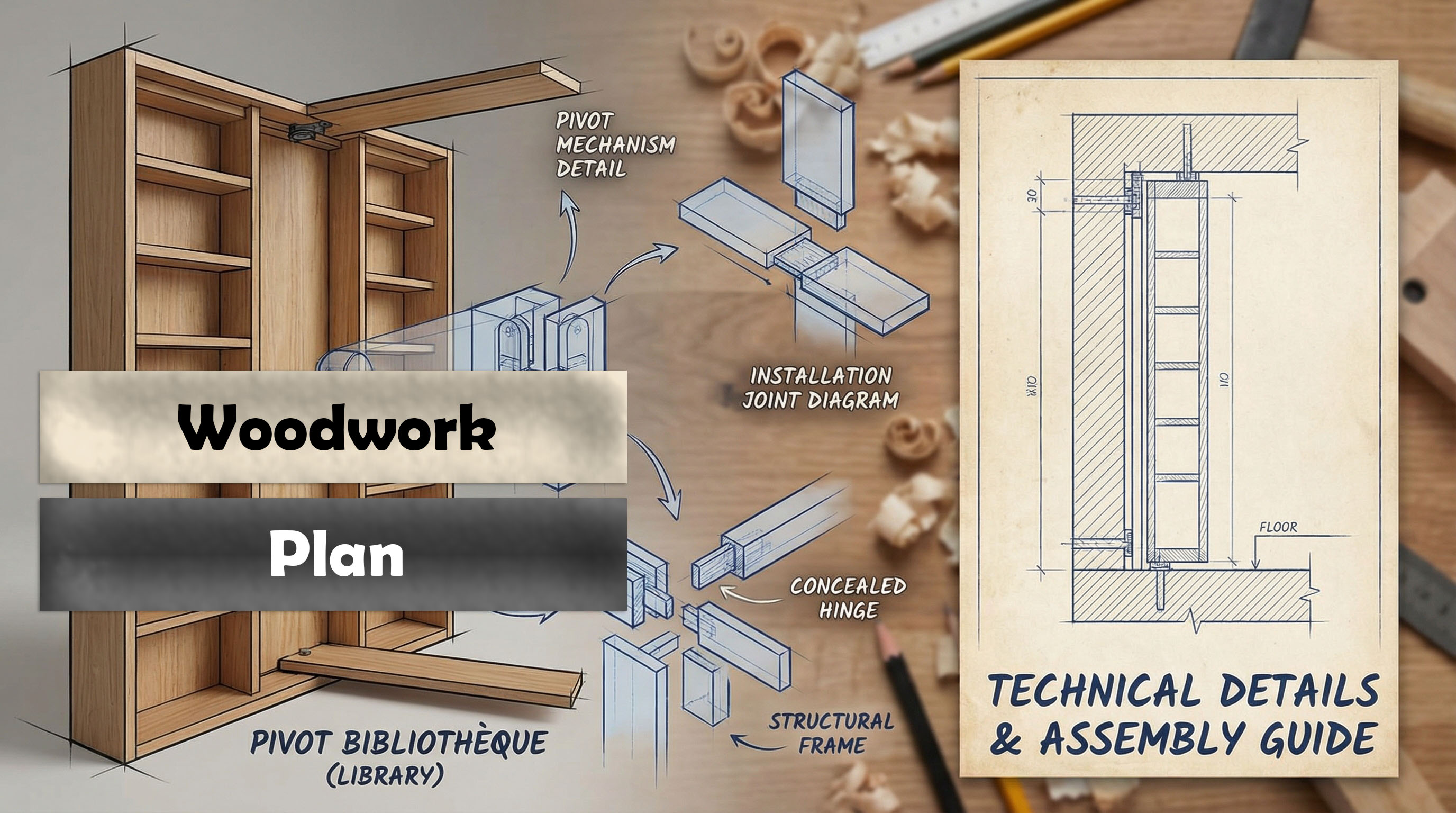
Wood is one of the most noble and versatile materials in architecture. It brings warmth, texture, and a sense of luxury to any space. However, high-quality woodwork requires more than just skilled labor; it requires impeccable planning. The Plan Menuiserie Bois (Wood Joinery Plan) is the technical document that defines every wooden element in a project, from doors and wall panels to bespoke libraries. At Buildmodeler 3D, we believe that 3D Modeling is the only way to ensure that these expensive elements fit perfectly the first time.
What is a Wood Joinery Plan? This plan is a critical part of the DCE (Technical Dossier) phase. It acts as a detailed catalog for the carpenter, specifying:
1. Custom Doors: Including dimensions, wood species, hinges, and opening mechanisms (sliding, pivot, or classic).
2. Wall Cladding (Revetement Bois): Designing wood slats or panels that cover walls to improve aesthetics or acoustics.
3. Bespoke Furniture: Fixed elements like integrated libraries (bibliothèques), walk-in closets, or kitchen cabinetry.
4. Architectural Slats (Lames en bois): Modern decorative elements used for partitions or ceiling accents.
The Risk of Manual Errors Woodwork is expensive. A mistake of even 5 millimeters in a door frame or a library unit can result in hours of rework on-site or, worse, the total loss of costly raw materials. Traditional 2D plans often struggle to show how a wooden cabinet interacts with a recessed lighting system in the ceiling or a complex flooring joint.
Why 3D Modeling is Essential for Wood Joinery Integrating 3D Modeling into woodworking design transforms the final quality of the project:
5. Millimeter-Level Precision: In 3D, we model every joint and every panel to its exact real-world dimensions. This "Digital Mockup" allows the carpenter to see exactly how the pieces will fit together before they even touch their tools. This is especially vital for "Built-in" furniture that must fit perfectly between two walls.
6. Material and Grain Visualization: Wood has a natural grain and texture. With 3D rendering, we can simulate different wood species (Oak, Walnut, Teak) and finishes (Matte, Glossy, Natural). This helps the client visualize how the wood’s color will interact with the room’s lighting and other materials.
7. Coordination with Other Trades: One of the most common issues on-site is a wooden panel covering an electrical outlet or a thermostat. By using a coordinated 3D model, we ensure that the woodwork design leaves room for all electrical and technical outlets, preventing the need for ugly "cut-outs" during installation.
8. Functional Testing: 3D modeling allows us to test the movement of doors and drawers virtually. We can ensure that a cabinet door doesn't hit a nearby wall or light fixture when opened, ensuring the design is as functional as it is beautiful.
Conclusion The Wood Joinery Plan is the signature of a high-end project. By leveraging Advanced 3D Modeling, you eliminate the guesswork associated with custom woodwork. It provides the carpenter with an indisputable technical roadmap and the owner with a photorealistic preview, ensuring that every wooden element is a perfect fusion of craftsmanship and engineering.