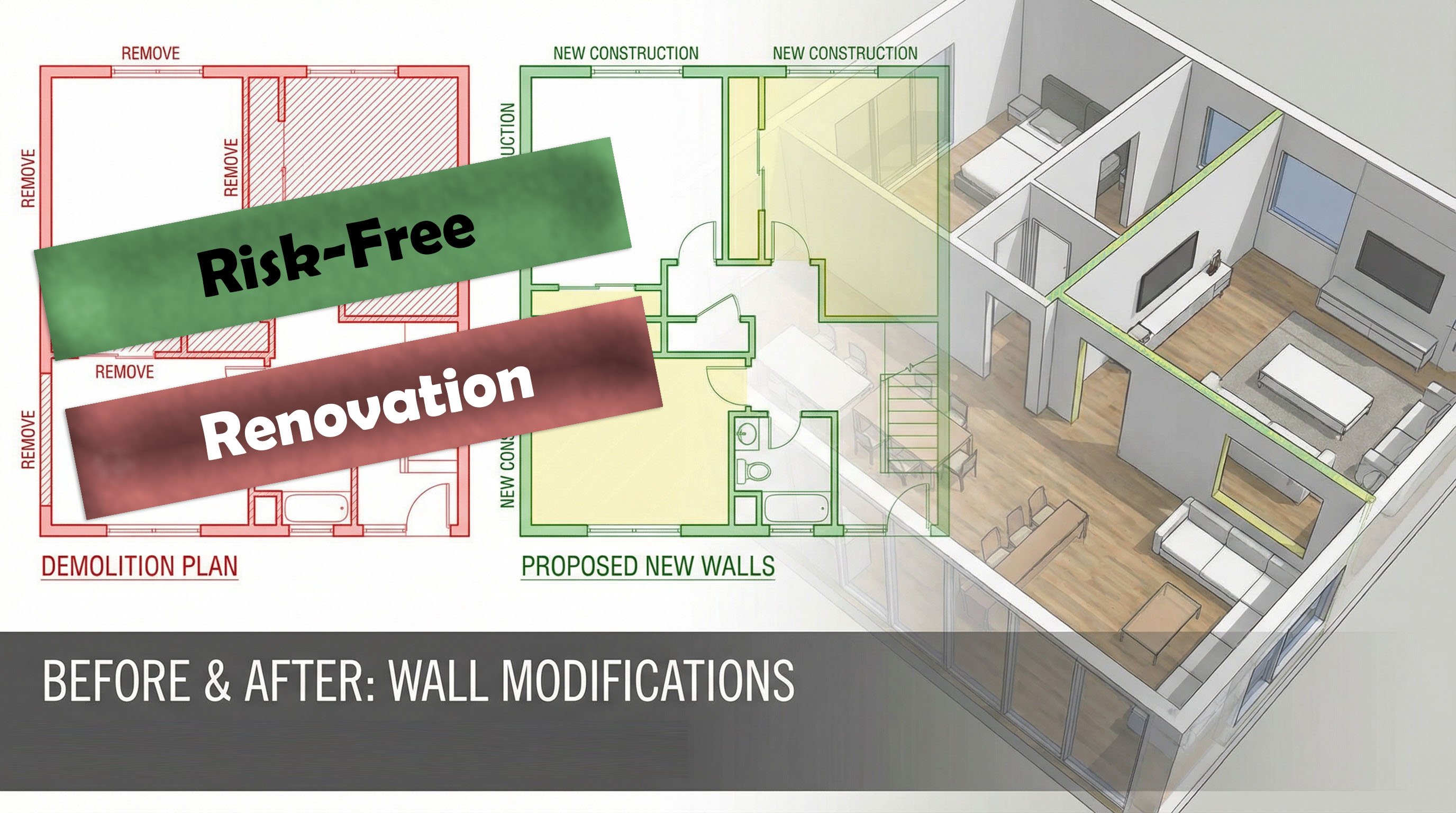
In the world of architecture, not every project starts from a blank slate. Many projects involve the renovation, extension, or internal reorganization of an existing structure. This is where the Plan de Démolition et de Construction (Demolition and Construction Plan) becomes the most important document in your technical dossier. At Buildmodeler 3D, we believe that visualizing what stays and what goes is essential to avoid structural disasters and budget leaks.
What is a Demolition and Construction Plan? This specific plan serves as a surgical guide for contractors. It clearly distinguishes between:
1. Elements to be Demolished (Démolition): Walls, partitions, or structural elements that need to be removed to open up space or change the layout.
2. Elements to be Built (Construction): New walls, structural reinforcements, or extensions that will define the new identity of the building. Without this plan, a renovation project is prone to errors, as workers might accidentally remove a load-bearing wall or misplace a new partition, leading to expensive repairs.
The Role of Clarity in Technical Drawings Traditionally, these plans use color coding: red for demolition and yellow or green for new construction. While this works on paper, it lacks the depth required to understand how these changes affect the overall volume and stability of the project. This is where the transition to a digital environment becomes a game-changer.
Why 3D Modeling is Essential for Demolition & Construction Navigating a renovation without 3D Modeling is like driving in the dark. Here is how 3D technology protects your project:
3. Structural Safety & Visual Check: Before a single hammer hits a wall, a 3D model allows us to perform a "Digital Survey." We can visualize which walls are load-bearing and how the weight will be redistributed once a section is removed. This visual confirmation is much safer than relying solely on 2D sections.
4. Accurate Volume Perception: When you decide to "knock down a wall" to create an open space, it’s hard to imagine the result in 2D. In 3D, you can see the immediate impact on light flow and interior volumes. You can verify if the new layout truly achieves the "open feeling" you desire before the irreversible process of demolition begins.
5. Clash Detection with Utilities: In existing buildings, pipes and electrical wires are hidden behind walls. By creating a 3D model of the existing state and the proposed changes, we can predict if a new wall will interfere with existing plumbing or if a demolition will expose sensitive technical networks.
6. Precise Waste & Material Estimation: 3D software calculates the exact volume of debris that will be generated (for removal costs) and the exact amount of new materials needed for construction. This level of precision is vital for maintaining a strict budget in renovation projects.
Conclusion The Demolition and Construction Plan is the blueprint for transformation. By integrating Advanced 3D Modeling into this phase, you replace guesswork with scientific precision. It provides the ultimate security for the building's structure and the ultimate clarity for the owner's vision, ensuring a smooth transition from the old to the new.