Chat with us
1

The EXE Phase: Translating Architectural Vision into Construction Reality with 3D Precision

5 min read
The EXE Phase: Translating Architectural Vision into Construction Reality with 3D Precision

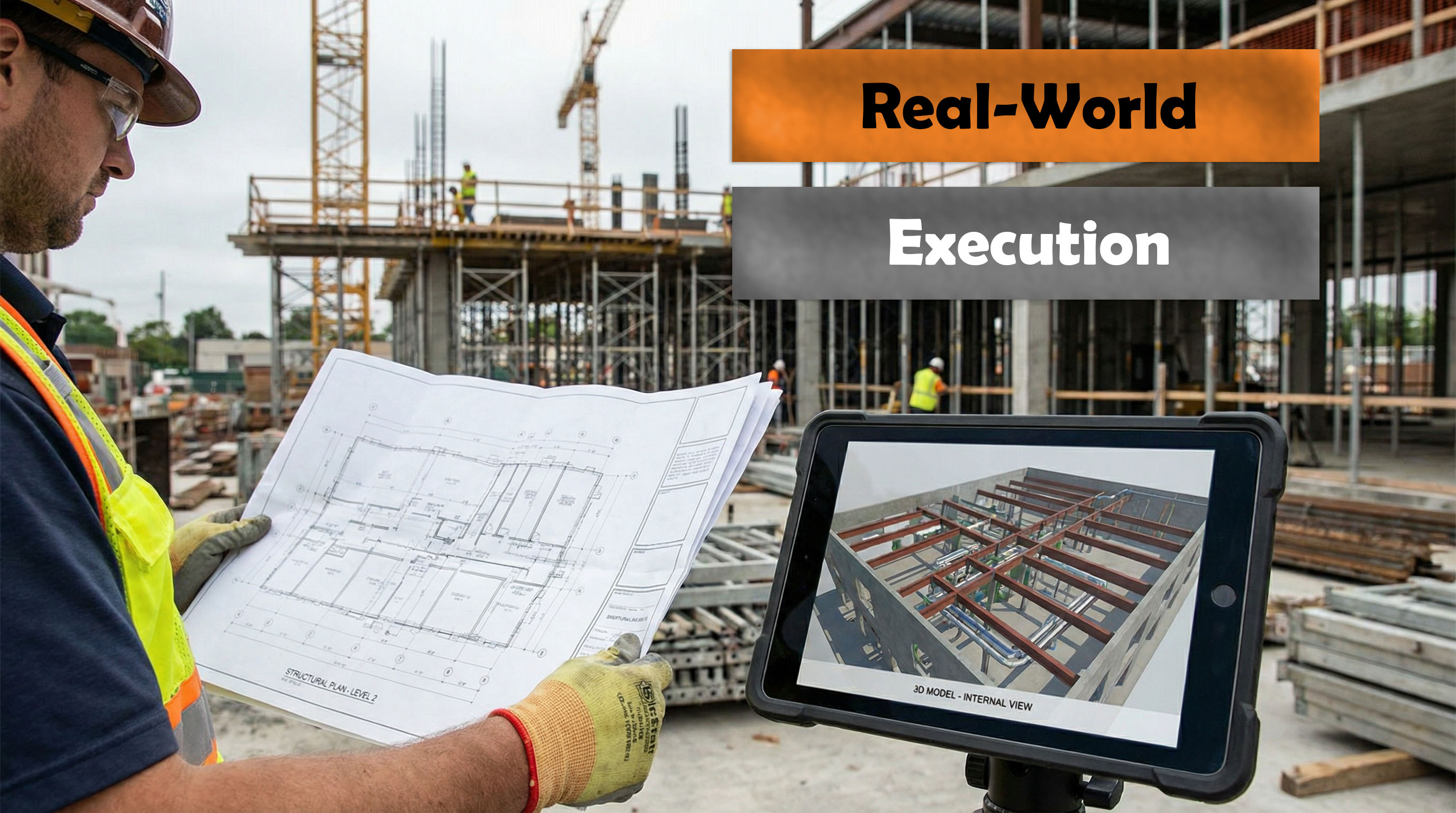
After months of conceptual design and administrative approvals, your project finally reaches its most decisive stage: the EXE (Phase d’Exécution). This is the moment where theory meets practice. The EXE phase is responsible for producing the definitive technical drawings that will guide every worker, engineer, and craftsman on the construction site. At Buildmodeler 3D, we believe that the only way to ensure a seamless transition from a digital model to a physical building is through high-fidelity 3D Modeling as the foundation of the execution dossier.

What is the EXE Phase? The EXE phase is the production of the "Final Working Drawings." Unlike earlier stages, there is no room for approximation here. The plans must be "Execution-Ready," meaning they contain every necessary detail for the actual building process. This includes:

1. Ultra-Precise Floor Plans: Detailed layouts with final dimensions for masonry, partitions, and structural openings.
2. Technical Sections (Les Coupes): Vertical "cuts" through the building that show the exact thickness of floors, the height of ceilings, and the complex layering of insulation and finishes.
3. Detailed Facades: Final exterior drawings that specify the exact placement of cladding, windows, and architectural ornaments.

The High Stakes of the Construction Site The construction site (Le Chantier) is an unforgiving environment. Any ambiguity in the plans leads to "on-site improvisation," which is the leading cause of structural errors, aesthetic compromises, and massive budget overruns. If a section doesn't match the floor plan, or a facade drawing is missing a technical detail, the entire work can grind to a halt.

Why 3D Modeling is the Core of the EXE Phase Integrating 3D Modeling into the execution phase is what separates modern professional engineering from traditional drafting:

4. The "Single Source of Truth": In a 3D-driven EXE phase, the floor plans, sections, and facades are all extracted from the same 3D model. This means they are 100% synchronized. If a window moves by 5cm in the 3D model, it is automatically updated in every section and facade, eliminating the human errors common in 2D drafting.
5. Complex Structural Coordination: Using 3D, we can visualize the interaction between the reinforced concrete structure and the architectural finishes. This allows us to solve complex junctions—like how a staircase meets a landing or how a hidden gutter integrates with a roof—digitally before any concrete is poured.
6. Enhanced Visual Clarity for Workers: A 2D plan can be difficult to read in the heat of a busy construction site. Providing the site manager with 3D perspectives of complex technical details ensures that the vision is understood instantly. This reduces the need for constant clarification and speeds up the construction process.
7. As-Built Accuracy: By maintaining a 3D model during execution, we can quickly adapt the plans to any minor changes required by site conditions. This ensures that the final "As-Built" documents are a perfect reflection of reality, which is vital for the future maintenance of the building.

Conclusion The EXE phase is the final bridge to your dream building. By leveraging Advanced 3D Modeling, you ensure that the technical plans are not just drawings, but a precise, coordinated, and flawless guide for construction. It provides the security of engineering excellence and the peace of mind that your project will be built exactly as it was designed, down to the last millimeter.

Discover more articles

Explore our collection of articles on 3D modeling and architecture.