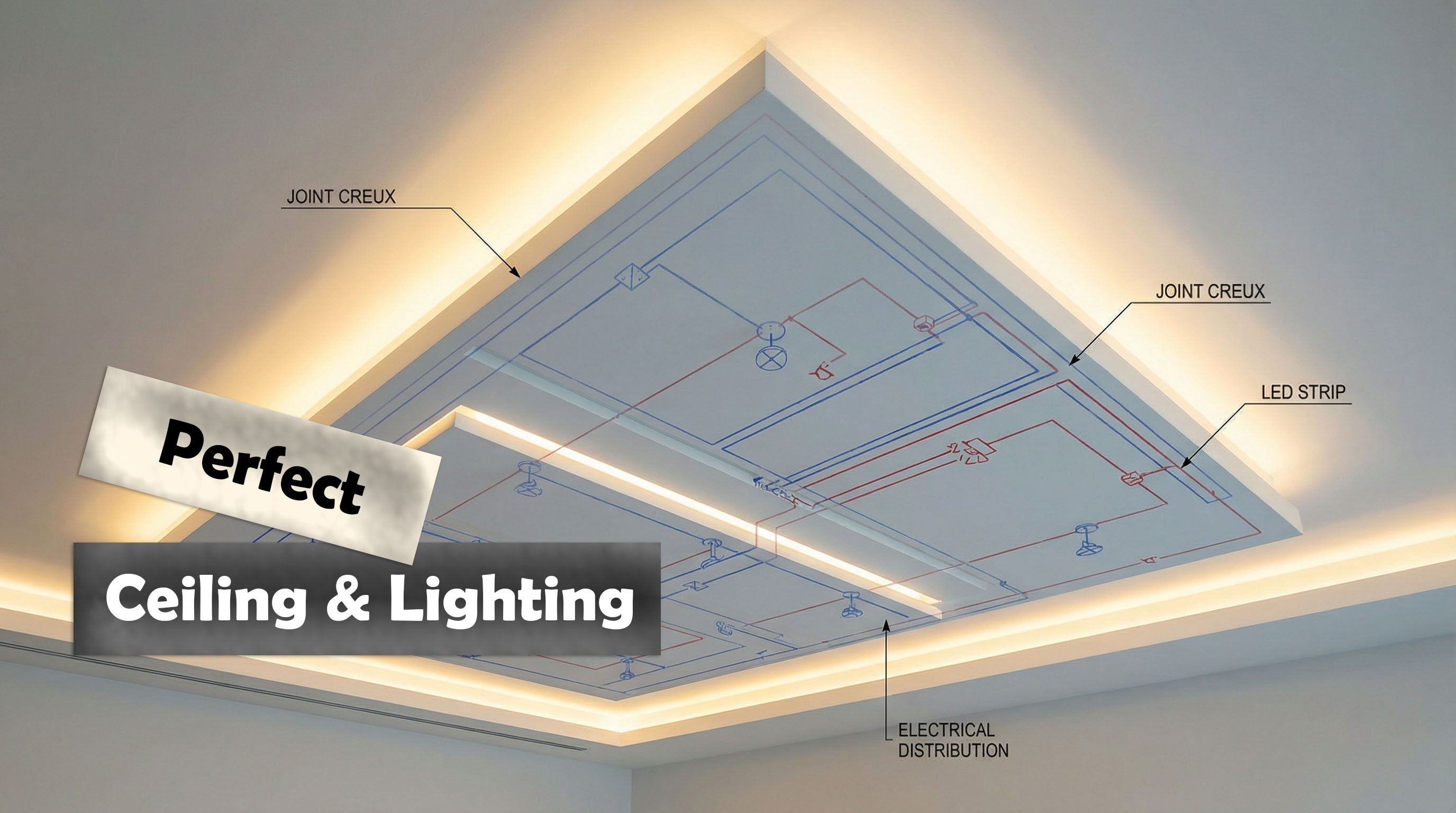
In modern architecture, the ceiling is often referred to as the "fifth wall." It is no longer just a flat surface but a complex technical landscape that houses lighting, ventilation, and decorative elements. The Plan Faux-Plafond & Électricité (False Ceiling and Electrical Plan) is the technical document that ensures these elements coexist in perfect harmony. At Buildmodeler 3D, we believe that the only way to achieve a flawless finish is through high-precision 3D Modeling.
What is a False Ceiling and Electrical Plan? This combined plan is a specialized part of the DCE phase. It details the design and execution of the ceilings while coordinating them with the electrical network. Key elements include:
1. Joint Creux (Recessed Joints): Precise lines that separate the ceiling from walls or different ceiling levels, creating a modern, floating effect.
2. Coves and Domes (Coupoles): Decorative structural elements that add depth and character to a room.
3. Lighting Placement: Determining the exact position of spotlights, chandeliers, and LED strips in relation to the architectural features of the ceiling.
The Challenge of Coordination The biggest risk in construction is a "clash" between trades. For example, an electrician might place a spotlight exactly where a structural support for the false ceiling is located. Without a coordinated plan, these errors lead to messy "patch-up" jobs on-site that ruin the aesthetic quality of the project.
Why 3D Modeling is Essential for Ceilings & Lighting Integrating 3D Modeling into this technical phase transforms how we design and build:
4. Millimeter Precision for Joint Creux: In 3D, we can visualize the exact thickness and depth of recessed joints. We ensure that these lines are perfectly continuous throughout the space, aligning with windows, doors, and furniture layouts.
5. Perfect Lighting Alignment: The 3D model allows us to calculate the exact distance between spotlights and architectural features. You can see how the light will hit a "Joint Creux" or how a "Coupole" will be illuminated before a single wire is pulled. This prevents shadows or uneven lighting spots.
6. Technical Integration (Clash Detection): The most significant benefit of 3D is seeing "above" the ceiling. We can model the air conditioning ducts, plumbing pipes, and electrical conduits. This ensures that the beautiful ceiling design you see from below has enough space to accommodate all the technical equipment above it.
7. Visualizing the Final Atmosphere: With 3D rendering, we don't just show you a circle on a map for a light; we show you the *effect* of that light. You can experience the ambiance of the room at night, seeing how the materials reflect the light from the recessed coves.
Conclusion The False Ceiling and Electrical Plan is where technical engineering meets interior luxury. By leveraging Advanced 3D Modeling, you eliminate guesswork and on-site improvisation. It guarantees that every joint is straight, every light is centered, and every technical element is hidden, resulting in a ceiling that is a true work of art.