Chat with us
1

The Roadmap to Success: Understanding the 4 Essential Phases of Any Architectural Project

5 min read
The Roadmap to Success: Understanding the 4 Essential

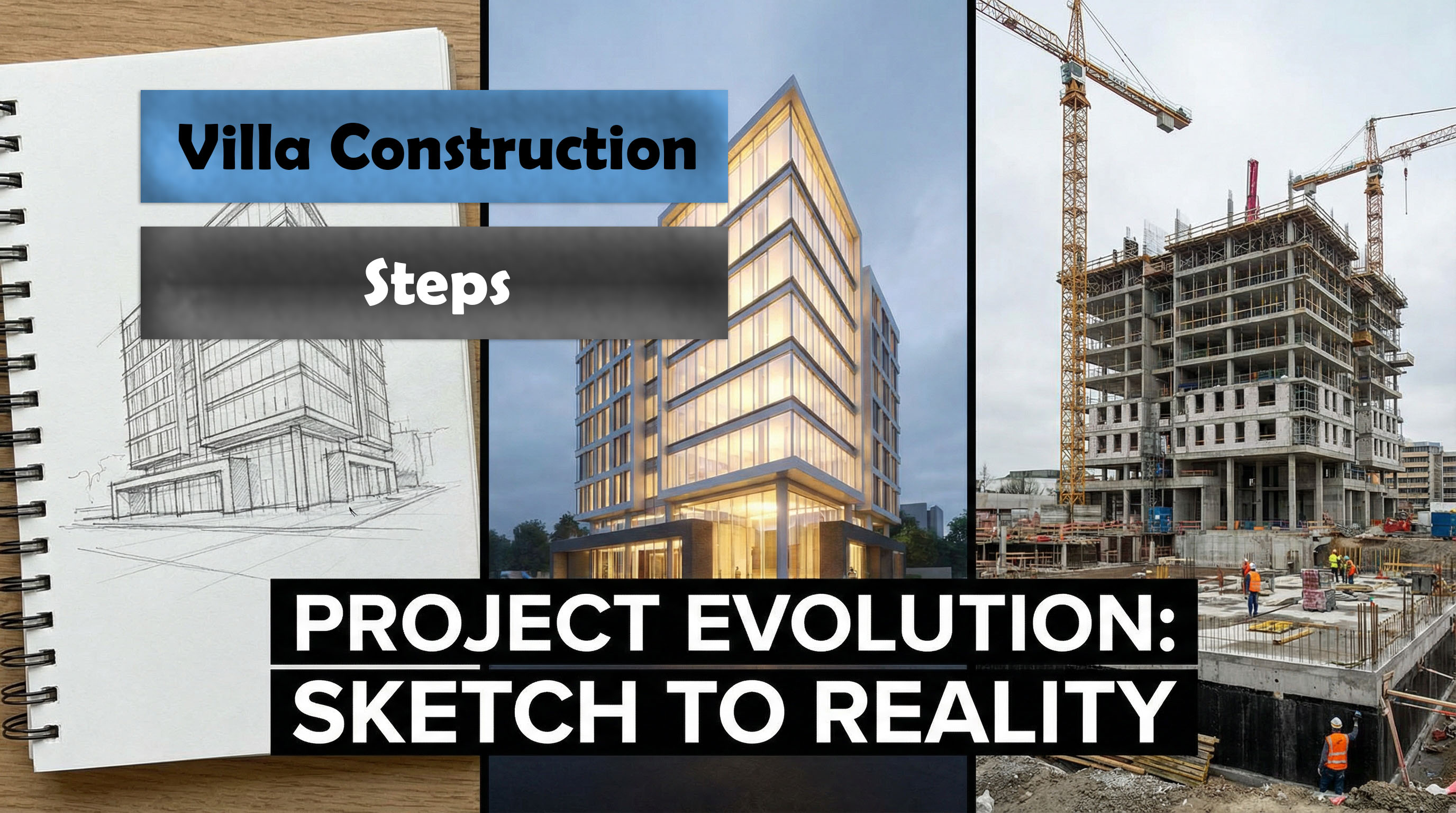
Embarking on a construction project is a complex venture that requires a clear structure to move from an idea to a physical reality. Whether you are planning a modern office, a residential complex, or a specialized facility, the process follows four fundamental technical phases: ESQ, DPC, DCE, and EXE. In today’s industry, 3D Modeling is no longer a luxury; it is the essential tool that guarantees success at every single one of these stages.

Phase 1: ESQ (Esquisse - The Conceptual Sketch) The ESQ phase is where the project's DNA is created. In this stage, the architect translates your functional needs and aesthetic desires into preliminary volumes and spatial organizations.

1. The Power of 3D Modeling: This is the most critical time for visualization. Traditional 2D floor plans can be abstract and difficult for non-professionals to interpret. By using 3D Modeling, we provide an immediate sense of scale, light, and proportion. It allows you to "walk through" the concept, enabling you to make informed decisions about the layout and overall feel before any technical commitments are made.

Phase 2: DPC (Dossier de Permis de Construire - The Authorization Phase) Once the concept is approved, the project enters the DPC phase. This is the administrative gateway where technical documents are prepared for submission to local authorities to obtain the necessary building permits.

2. The Power of 3D Modeling: Most urban planning departments now require "Landscape Insertion" (Insertion Paysagère). A high-fidelity 3D render is the most persuasive tool to show authorities exactly how the project will integrate with its surroundings. It minimizes the risk of rejection by providing a clear, realistic proof of the project’s impact on the environment.

Phase 3: DCE (Dossier de Consultation des Entreprises - The Tendering Phase) The DCE is the technical heart of the project. A comprehensive dossier is created, including detailed specifications and quantities, to consult various contractors and obtain accurate price quotes.

3. The Power of 3D Modeling: Accuracy is paramount here. A detailed 3D model allows for precise "Quantity Take-offs" (Métrés). It ensures that every contractor understands the complexity of the design, from the structural framework to the specific materials. This transparency prevents "unforeseen costs" and ensures that the bids you receive are fair, accurate, and comparable.

Phase 4: EXE (Exécution - The Construction Phase) The final stage, EXE, involves creating the ultra-detailed working drawings that guide the workers on the construction site. These plans cover every technical detail required for actual building.

4. The Power of 3D Modeling: During execution, the 3D model serves as the "Digital Twin" of the project. It is used for "Clash Detection"—identifying where structural, electrical, or plumbing systems might conflict before they are actually built. Solving these problems in a 3D environment is thousands of dollars cheaper than solving them on a live construction site.

Conclusion Navigating through ESQ, DPC, DCE, and EXE ensures a disciplined and professional result. By integrating 3D Modeling into each phase, you transform a technical process into a transparent, visual, and highly efficient journey, ensuring that what was imagined is exactly what is built.

Discover more articles

Explore our collection of articles on 3D modeling and architecture.